

Pediatric Spina Bifida Center
Understanding Spina Bifida: A Guide for Patients and Families
What is Spina Bifida?
Spina bifida is a birth defect that occurs when the spine and spinal cord don't form properly. It's a type of neural tube defect that can cause a range of physical and neurological issues. The severity of spina bifida can vary greatly from person to person.
Types of Spina Bifida
- Spina Bifida Occulta: The mildest form, where there is a small gap in the spine, but no opening or sac on the back. It often doesn't cause any symptoms or disabilities. It is important to see a pediatric neurosurgeon, however, as many patients can have tethered cords or other spinal anomalies that may cause problems later in life.

A bump on the lower back concerning for a lipomyelomeningocele, a form of spina bifida occulta.

A tuft of hair that is a sign of possible spina bifida occulta.

A sacral dimple that is a sign of possible spina bifida occulta.
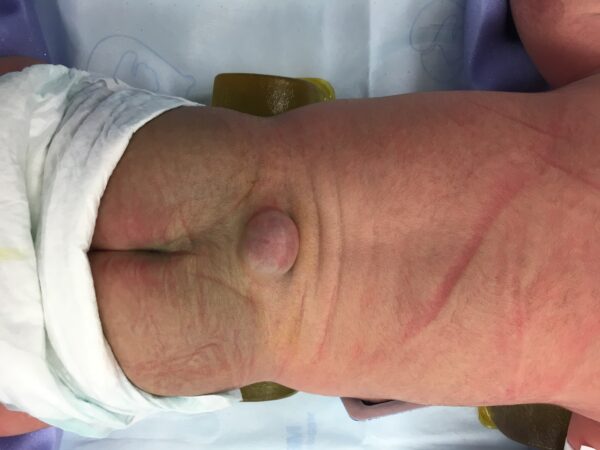
Meningocele - Closed
- Meningocele: A rare form where a fluid-filled sac protrudes through the spine, but the spinal cord is not in this sac. There may be minor disabilities.

A myelomeningocele that needs to be treated soon after birth.
- Myelomeningocele: The most severe form, where the spinal canal is open along several vertebrae in the back, allowing the spinal cord and membranes to protrude, forming a sac. This can result in significant disabilities. Surgery to repair the defect must often be performed in the first few days of life.

Symptoms of Spina Bifida
Symptoms can range from none to severe and may include:
- Weakness or paralysis in the legs
- Bowel and bladder problems
- Hydrocephalus (excess fluid in the brain)
- Orthopedic issues (such as scoliosis)
Diagnosing Spina Bifida
Spina bifida can often be diagnosed before birth through:
- Maternal blood tests
- Ultrasound
- Amniocentesis
After birth, imaging tests like Ultrasound, MRI, or CT scans can provide more information.
Treatment for Spina Bifida
Treatment depends on the type and severity of the condition and may include:
- Prevention: Folate deficiency is a common and important cause of spina bifida. It is important to take the proper supplementation in the first trimester to reduce the risk of spina bifida.
- Prenatal counseling: If your unborn baby is diagnosed with spina bifida, it is important to consult with a pediatric neurosurgeon to learn more about the disease specific to your child.
- Surgery: For myelomeningocele, surgery is usually performed within 24 to 48 hours after birth to close the opening in the spine. For other types of spina bifida, surgery is usually performed when patients are a little older.
- Shunt Placement: To manage hydrocephalus, a shunt may be placed to drain excess fluid from the brain.
- Physical Therapy: To improve mobility and muscle strength.
- Orthopedic Devices: Such as braces or wheelchairs to aid movement.
- Bowel and Bladder Management: Techniques to manage continence.
- Ongoing Medical Care: Regular check-ups with a team of specialists.
Why You Should Choose NJPNI:
Living with Spina Bifida
Many people with spina bifida lead full and active lives. It's important to have a supportive care team, which may include neurosurgeons, urologists, orthopedic surgeons, physical therapists, and other specialists.
Support and Resources
- Spina Bifida Association: https://www.spinabifidaassociation.org/
- Spina Bifida Guidelines: https://www.cns.org/guidelines/pediatric-myelomeningocele/1-introduction-methods-2
- Educational resources: Coming Soon!
Contact Us for more information or to schedule an appointment with our Spina Bifida Clinic, please contact us at 973-326-9000.